War in Iran & CA Policies Drive Los Angeles Gas Price Spikes
Los Angeles drivers are once again facing the harsh reality of soaring fuel costs, with
Los Angeles Gas Prices recently hitting an average of $5.17 per gallon. This latest surge, which saw a dramatic 17-cent jump overnight in LA County, isn't merely a seasonal blip. It's a complex confluence of global geopolitical turmoil, specifically the recent conflict in Iran, and long-standing, unique California regulatory policies that amplify every external shock. For many residents, from daily commuters to critical gig economy workers, these escalating costs translate directly into significant financial strain and a mounting sense of frustration.
The Global Ripple Effect: War in Iran and Oil Markets
The most immediate and dramatic catalyst for the recent gas price hike across Southern California has been the escalating conflict in Iran. According to AAA, the national average for gas prices climbed nearly 50 cents a gallon in the week following the joint U.S.-Israel attack on Iran. This isn't just about direct supply disruptions, but rather the immense uncertainty and speculation that grips global oil markets during periods of heightened geopolitical tension.
When a major oil-producing region or critical shipping lane faces instability, traders and investors react swiftly, driving up the price of crude oil. Even before the latest military actions, experts noted that prices were already trending upward due to typical seasonal patterns, as refineries switch to more expensive summer-blend gasoline. However, the conflict injected an additional "risk premium" into oil prices, pushing them significantly higher. This global volatility disproportionately affects regions like Los Angeles, where the foundational cost of crude oil is just one layer in a multi-tiered pricing structure. The ripple effect from the Middle East demonstrates how interconnected our local pump prices are with international events, often leaving consumers feeling helpless in the face of distant conflicts.
California's Unique Fuel Landscape: Regulations and Production
While global events provide the spark, California's distinctive fuel market acts as a highly flammable accelerant. Experts consistently point to the state's stringent regulatory policies and reduced in-state gasoline production as significant contributors to the consistently higher
Los Angeles Gas Prices compared to the national average.
California mandates its own special blend of cleaner-burning gasoline, designed to combat air pollution. This unique formulation is more expensive to produce and requires specialized refining capacity, much of which is located within the state. When local refineries experience planned or unplanned outages, the ability to import this specific blend from other states is limited, creating supply bottlenecks that drive up prices. Furthermore, California levies some of the highest state and local taxes on gasoline in the nation, including excise taxes, sales taxes, and carbon fees. These taxes alone can add over $1.00 to the price of a gallon of gas.
Add to this a trend of declining in-state oil production and refining capacity, and you have a market highly susceptible to price shocks. Less local production means greater reliance on imported crude and refined products, increasing transportation costs and vulnerability to global market fluctuations. This "California premium" isn't just a minor surcharge; it's a structural reality that ensures residents consistently pay significantly more at the pump, making any global or national price surge feel even more acutely painful.
On the Ground in Los Angeles: A Tale of Two Pumps
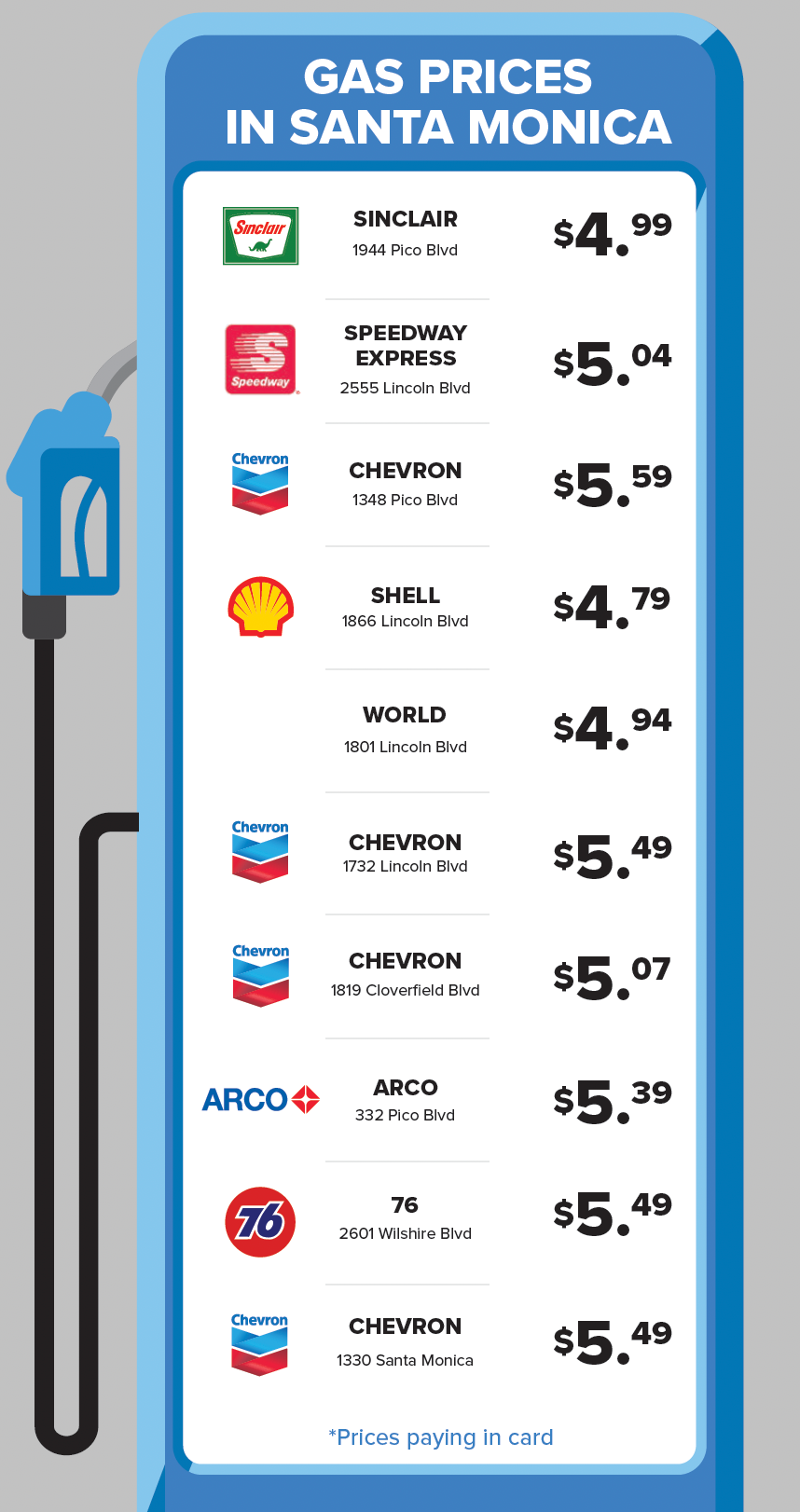
The impact of these combined forces is dramatically evident on the streets of Los Angeles, where the disparity in pricing can be astounding. As drivers lamented, the average in Los Angeles County reached $5.17, with surrounding Orange County at $5.15 and Riverside County at $5.06. Yet, these averages mask a far more extreme reality.
At one end of the spectrum, drivers like Deejay Brown are "always searching for cheaper gas," a common pursuit for Angelenos struggling to make ends meet. Eyewitness News spotted an American Oil station in Exposition Park offering gas just above $4 a gallon. This quest for the lowest price is a daily ritual for many, often involving careful planning and navigating traffic to save a few dollars.
However, just a few miles away, the landscape shifts dramatically. A Chevron station in downtown Los Angeles was charging an astonishing $8.21 a gallon, leaving drivers like Denise Rodriguez exclaiming, "It's insane, insane work...it's too too high. I definitely won't be coming here for that." Visitors from out of state, like Matt Jozwiak from New York, were equally stunned, unable to believe the astronomical figures. This stark contrast highlights the extreme volatility within the
Los Angeles Gas Prices market. Factors contributing to this wide swing include:
* **Location and Real Estate Costs:** Gas stations in prime, high-traffic areas (especially downtown) often face exorbitant rent and operational costs, which are passed on to consumers.
* **Brand Premium:** Major brand stations (Chevron, Shell, etc.) often charge a premium for their perceived quality, additives, and convenience, even if the base fuel is similar.
* **Local Competition:** Areas with fewer gas stations or less competition can see higher prices.
* **Demand Dynamics:** Stations catering to specific demographics or travel patterns (e.g., near airports, tourist attractions) might charge more knowing drivers are less price-sensitive.
* **Fuel Grade:** Premium fuels inherently cost more, adding to the top end of the price spectrum.
For those dependent on their vehicles, such as Uber drivers like the one quoted who is "getting killed right now," these extreme fluctuations are not just an inconvenience but a threat to their livelihood.
Navigating the Surge: Tips for Los Angeles Drivers
While the macro factors driving
Los Angeles Gas Prices are largely beyond individual control, there are practical steps drivers can take to mitigate the impact of these surges:
1.
Utilize Gas Price Apps: Apps like GasBuddy, Waze, and AAA Gas Prices can help you locate the cheapest gas stations in your immediate area. A few minutes of planning can save significant money over time, especially with the wide price disparities seen in LA.
2.
Adjust Driving Habits:
*
Slow Down and Drive Smoothly: Aggressive driving, rapid acceleration, and sudden braking significantly reduce fuel efficiency.
*
Avoid Idling: Turn off your engine if you're going to be stopped for more than 30 seconds.
*
Maintain Proper Tire Pressure: Underinflated tires can reduce fuel economy by up to 3%.
3.
Vehicle Maintenance is Key: Regular tune-ups, air filter replacements, and checking your oxygen sensor can improve fuel efficiency. A well-maintained engine runs more economically.
4.
Consider Public Transportation or Carpooling: Los Angeles has an expanding public transit system. For some commutes, taking the bus or Metro can be a viable and cost-effective alternative. Carpooling can also split fuel costs.
5.
Reduce Unnecessary Weight: Remove heavy items from your trunk or back seat that aren't needed for daily driving. Less weight means less fuel consumed.
6.
Plan Your Errands: Combine multiple trips into one efficient route to minimize driving distance and cold starts, which are less fuel-efficient.
7.
Explore Alternative Vehicles: If financially feasible, consider hybrid or electric vehicles. While the upfront cost is higher, the long-term savings on fuel and potentially maintenance can be substantial, especially with continued high
Los Angeles Gas Prices.
Conclusion
The recent spikes in Los Angeles Gas Prices are a stark reminder of the delicate balance between global geopolitics and local economic realities. The war in Iran, combined with California's unique regulatory environment and declining in-state production, has created a perfect storm for consumers. While drivers like Michale Terry feel helpless, stating, "I really can't do nothing but complain," understanding the multifaceted causes and adopting proactive strategies can empower residents to better navigate these challenging times. As long as global oil markets remain volatile and California maintains its distinctive fuel standards, Los Angeles residents will likely continue to face some of the highest pump prices in the nation, making smart fuel consumption not just a choice, but a necessity.